
My Pool Is 20+ Years Old, What Fails First?
My Pool is 20 years old, what fails first?
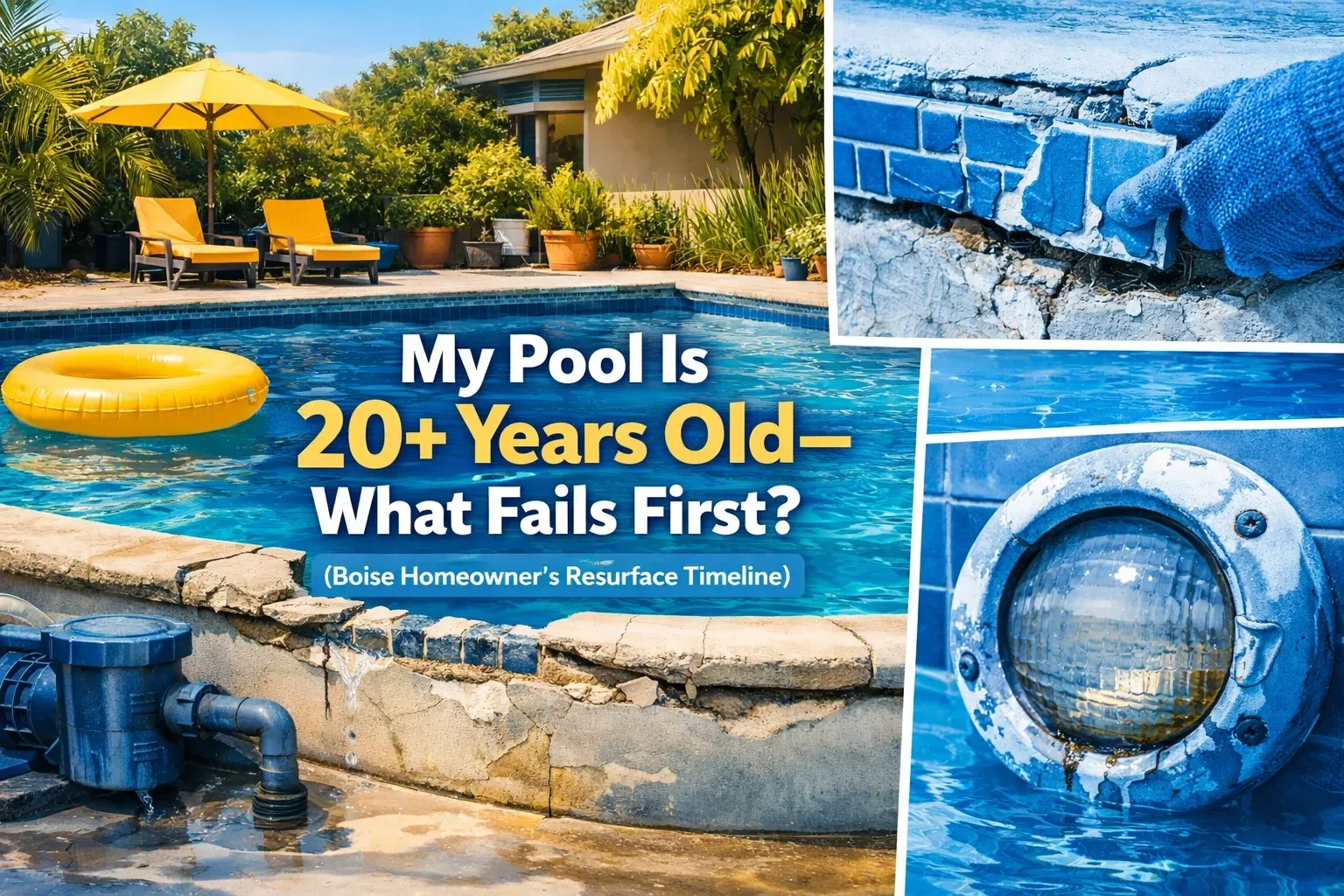
If your pool was built when your kids were toddlers and they're now sending you graduation announcements, you're probably noticing some wear and tear. Maybe the surface feels rough on your feet. Maybe you're adding more chlorine than you used to. Maybe you've got a slow leak that's driving your water bill up every summer.
Here's the truth: pools don't last forever, especially in Idaho's climate. And when you hit that 20-year mark, certain things start failing in a pretty predictable order. Let's walk through what typically goes first, and when it's time to stop throwing money at band-aid repairs.
What Fails First: Your Pool's Surface
The plaster or finish is almost always the first thing to go. We're talking about that smooth coating on the inside of your pool, whether it's traditional marcite plaster, pebble finish, or another material.
After two decades of Idaho summers (and winters), here's what happens:
- Rough, abrasive texture - Up to 78% of pools needing resurfacing show this issue. If your kids are complaining about scraping their feet or you're hesitant to do underwater handstands anymore, that's your first red flag.
- Staining and discoloration - Dark spots, rust stains, or that weird mottled gray look that makes your pool look older than it is.
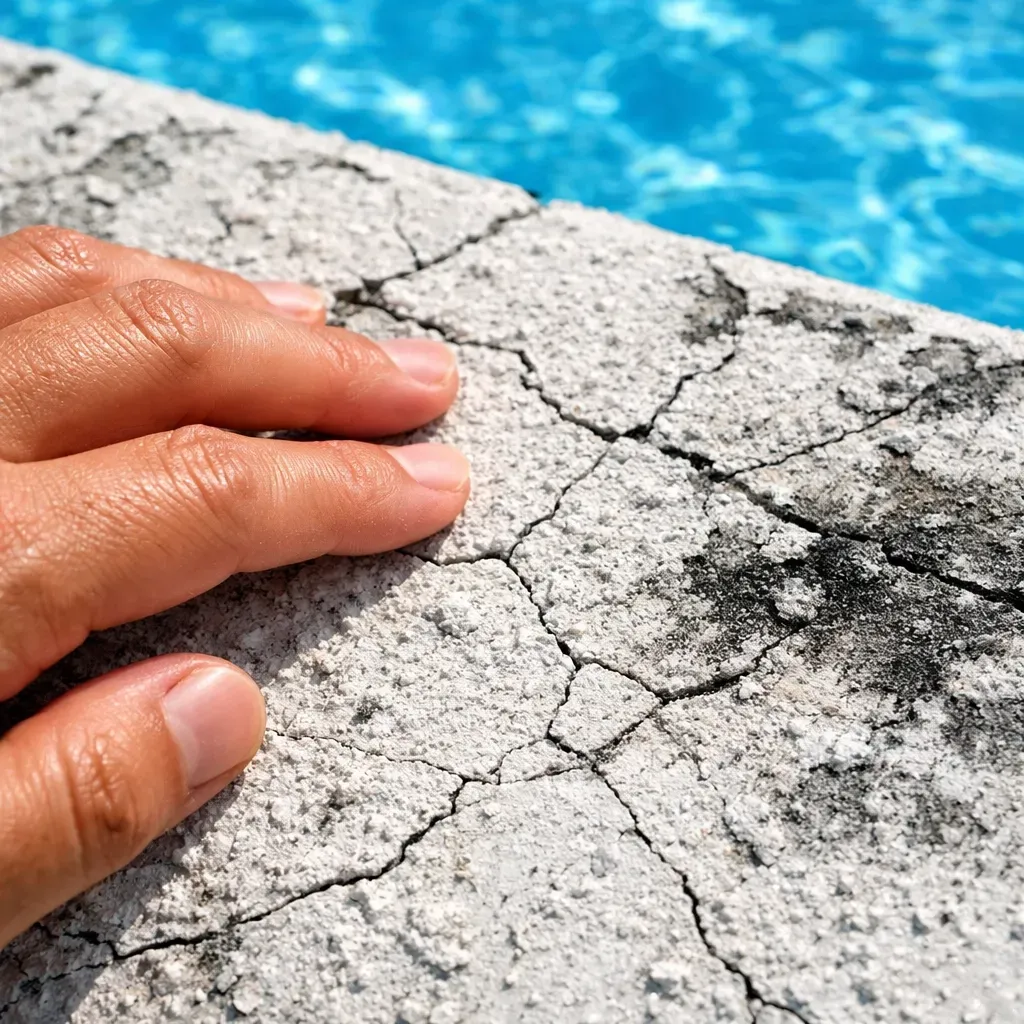
- Cracking and crazing - Those spiderweb cracks that start small but spread over time, especially after our freeze-thaw cycles hit them hard.
- Chalky or flaking surface - When you brush the walls and a cloud of white dust comes off, that's your plaster literally breaking down.
Why does this happen first? Your pool finish takes the brunt of everything: chemicals, UV rays, temperature swings, and constant water contact. In Boise and Meridian, we've got the added challenge of our dry climate (hello, high evaporation rates) and those temperature swings that can go from 95°F in July to 15°F in January.
The Domino Effect: Tile, Plumbing, and Equipment
Once your surface starts failing, other problems aren't far behind.
Pool Tile (Years 15-25)
Your waterline tile might start popping off or cracking. This happens because:
- The thinset or grout behind the tile deteriorates
- Freeze-thaw cycles push tiles outward
- Calcium buildup creates pressure behind the tile line
When tiles start falling off, it's not just cosmetic: it exposes the bond beam to water damage and accelerates other problems.
Plumbing Systems (Years 20-30)
Your underground pipes, fittings, and connections are quietly aging where you can't see them. Signs of plumbing failure include:
- Slow leaks that constantly drop your water level
- Air in the lines when your pump is running
- Soft spots or settling in your deck (water is escaping underground)
- Higher water bills even though you're not using the pool more
Idaho's ground movement: especially in our clay-heavy Treasure Valley soil: can shift and crack old PVC pipes. If your pool was built before modern flexible plumbing standards, you're even more vulnerable.
Equipment Breakdown (Years 15-25)
Your pump, filter, and heater weren't designed to last forever. After 20 years:
- Pumps lose efficiency and cost way more to run than modern variable-speed models
- Filters can't keep up with proper circulation
- Heaters corrode from the inside out (especially gas heaters in Idaho's hard water)
- Replacement parts become scarce or expensive for discontinued models
Here's a reality check: if you're running equipment from 2005, you're probably paying 2-3 times more in energy costs than you would with updated, energy-efficient gear.
Idaho's Freeze-Thaw Cycle: The Secret Pool Killer
Let's talk about what makes Boise-area pools age differently than pools in, say, Phoenix or San Diego.
Our freeze-thaw cycle is brutal. When water gets into tiny cracks in your plaster, tile, or concrete: and then freezes: it expands. That expansion makes the crack bigger. Then it thaws, refills with water, and freezes again. Rinse and repeat for 100+ freeze-thaw cycles per winter.
This is why:
- Surface cracks spread faster here than in warmer climates
- Tile pops off more frequently
- Plumbing leaks develop sooner
- Deck cracks appear around the coping
Even if you properly winterize your pool (and you should!), the structure itself is still exposed to temperature swings. A pool that might last 30 years in Southern California might need major work at 20 years in Idaho.
When to Stop Patching and Start Remodeling
Here's the million-dollar question: When do you stop fixing individual problems and just commit to a full remodel?
Use this checklist to help you decide:
Time to Remodel If:
- Your surface has multiple issues - If you've got rough texture AND staining AND cracks, patching won't cut it anymore.
- You're using way more chemicals than normal - Improper water chemistry causes up to 50% of premature surface failures, but sometimes the surface itself is the problem. A deteriorating finish leaches minerals and makes balancing your water nearly impossible.
- You've already done 2-3 patch repairs - If you're calling someone out every other year for a new leak or crack repair, you're just delaying the inevitable.
- Your equipment is 15+ years old - If you're facing a pump replacement AND a heater replacement AND your finish is rough, it makes more financial sense to do it all at once.
- You're avoiding using the pool - If the rough surface, constant maintenance, or ugly appearance means you're not even enjoying your backyard investment anymore, what's the point?
- You're selling your house in the next few years - A freshly remodeled pool can actually increase your home's value. A visibly aging, problem-prone pool? That's a negotiating point for buyers.
The Real Cost of Waiting
Let's be honest about money, because that's usually what keeps people from pulling the trigger on a remodel.
Waiting can actually cost you more. Here's how:
- Water loss from leaks - A slow leak can waste 30,000+ gallons per year (that's real money in Boise's summer months)
- Energy waste - Old equipment can cost $50-100+ more per month to operate
- Chemical waste - Bad surfaces make you use 2-3x more chlorine and balancing chemicals
- Compound damage - A small surface crack becomes a structural crack. A small tile issue becomes water damage to your bond beam.
- Emergency repairs - Waiting until something catastrophically fails usually means paying premium "emergency service" rates
At some point, you're spending thousands per year keeping an aging pool on life support. A full remodel starts to look like the smarter financial move.
How We Diagnose Aging Pool Problems in the Treasure Valley
At Idaho Pool Remodeling, we've seen hundreds of 20+ year-old pools across Boise, Meridian, Eagle, and Nampa. We know exactly what to look for: and more importantly, we know how Idaho's climate creates unique challenges.
When we do a pool inspection, we're checking:
- Surface integrity (using the "quarter test" and visual inspection for texture breakdown)
- Tile and coping condition
- Plumbing pressure tests to find hidden leaks
- Equipment efficiency and safety
- Structural cracks vs. cosmetic issues
- Water chemistry history (high chemical use tells us a story)
We'll give you an honest assessment: what needs immediate attention, what can wait, and what's just cosmetic. No fear-mongering, no upselling services you don't need: just straight talk about your pool's condition.
Your Next Steps
If your pool is in that 20-25 year range, now's the time to get ahead of major problems. Spring (like, right now in mid-February) is actually the perfect time to start planning a remodel: you'll beat the summer rush and be swimming in a beautiful, updated pool by Memorial Day.
Here's what we recommend:
- Schedule an inspection - Let's figure out exactly what's going on with your pool
- Get a realistic timeline - Some repairs can be phased; others need to happen all at once
- Explore finish options - Modern materials like EcoFinish and AquaBright last longer and look better than old-school plaster
- Consider equipment upgrades - Variable-speed pumps can cut your energy costs in half
Ready to stop wondering and start planning? Contact us for a consultation. We'll walk your property, assess your pool, and give you a clear picture of what's happening: and what your best options are.
Your 20-year-old pool has served you well. Let's talk about giving it another 20+ years of life: or helping you decide if it's time for a fresh start. Either way, you'll know exactly where you stand.