
The Cost of Cutting Corners: Why Commercial Pool Code Compliance Can’t Be an Afterthought
This is a subtitle for your new post
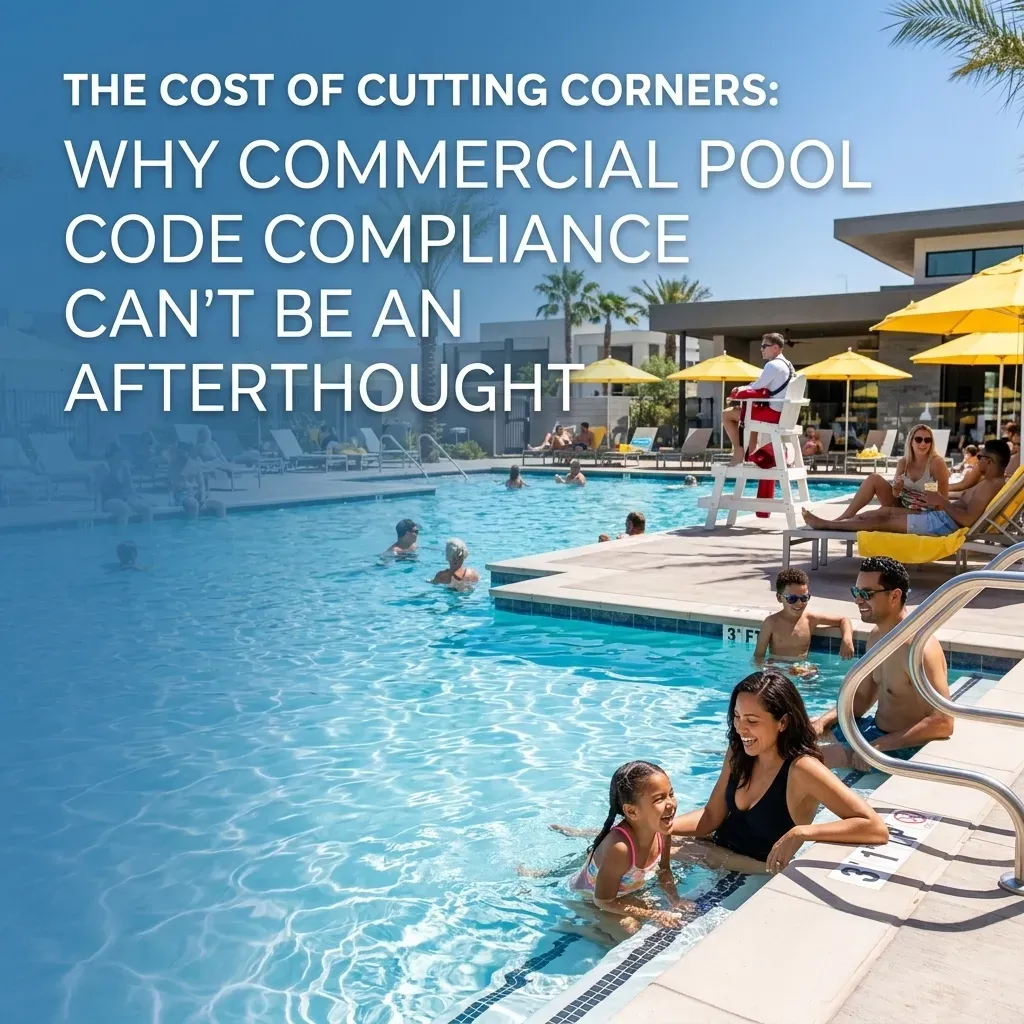
If you manage a hotel in downtown Boise, oversee a large HOA in Meridian, or run a high-traffic gym in the Treasure Valley, you know that your pool is more than just a place to swim: it’s a major liability. When it comes time for commercial pool remodeling in Boise, it’s incredibly tempting to look at a bid from a general contractor and think, "How hard can it be to resurface a pool and fix a few tiles?"
The truth is, it’s actually quite hard. Or rather, it’s incredibly detailed.
Commercial pools in Idaho are governed by a strict set of regulations that don't apply to your backyard oasis. While a residential pool is about aesthetics and personal enjoyment, a commercial pool is about public safety, ADA accessibility, and strict adherence to Idaho building codes. Cutting corners to save a few dollars on the front end often leads to tens of thousands of dollars in fines, legal fees, or: even worse: a forced closure during the height of our short Idaho summer.
Are you willing to risk your property’s reputation on a builder who doesn’t know the difference between residential and commercial code? At Idaho Pool Remodeling, we’ve seen what happens when these details are missed, and it’s never a pretty sight.
1. The High Price of "Small" Oversights
When we talk about commercial pool remodels, the stakes are significantly higher than in residential projects. A mistake on a residential deck might be an eyesore; a mistake on a commercial deck can mean a quarter million dollar settlement.
Health inspectors in Idaho don’t just "glance" at your pool. They come with measuring tapes, checklists, and a mandate to keep the public safe. If your contractor misses a single depth marker or the gate latch is a half-inch too low, your pool doesn't open. It’s that simple.
Beyond the inspectors, there is the massive shadow of liability. If an accident occurs in a pool that is found to be out of compliance: even if the non-compliance didn't directly cause the accident: your insurance company may have grounds to deny your claim. Imagine facing a massive personal injury lawsuit without the protection of your insurance policy because your contractor used the wrong type of "No Diving" tile. Safety is always number one, and in the commercial world, safety is spelled C-O-M-P-L-I-A-N-C-E.
2. Depth Markings: It’s Not Just About the Numbers
One of the most common things missed by general builders is the technical specification for depth markings. It’s not enough to just have numbers on the side of the pool. In Idaho, these markings must meet very specific criteria:
- Visibility and Contrast: The numbers must be a specific height and in a color that sharply contrasts with the background.
- Slip Resistance: Markings on the deck must be slip-resistant. We’ve seen contractors use standard tile or even paint that becomes a literal ice rink when wet. (And we all know how much Boise loves its "slip and slides," but not on a concrete pool deck!)
- Placement: They must be located at the maximum and minimum depths, at every foot of depth change in the shallow end, and at specific intervals around the perimeter (not to exceed 25 ft).
- Required Markers: Depth markings and No-Diving symbols are required at the waterline AND in the pool deck!
If a firm isn't specialized in pool tile and cleaning, they often treat these markings as an afterthought, leading to an immediate "failed" status on your next inspection.
3. The "No Diving" Dilemma
"No Diving" markers are perhaps the most vital safety feature in a commercial pool. Yet, they are frequently installed incorrectly. Federal and state codes often require both the words "No Diving" and the universal international symbol (the diver with a red circle and slash).
A less experienced firm might use stickers or cheap paint that peels off after one season of Idaho sun and chlorine. We’ve seen cases where markers were placed too far apart or were completely missing from the shallow areas (5 feet or less). At Idaho Pool Remodeling, we ensure these are permanent, high-contrast tiles that are embedded correctly into the interior finish or the deck, ensuring they remain visible for the life of the pool.
4. ADA Compliance: More Than Just a Lift
Since 2012, the Americans with Disabilities Act (ADA) and building code has required all public and commercial pools to be accessible. This usually means a fixed or portable pool lift. However, simply buying a lift and bolting it to the concrete isn't enough.
- Clear Deck Space: There must be a specific amount of clear deck space next to the lift to allow a wheelchair to maneuver.
- Water Depth: The lift must be positioned where the water is a certain depth to ensure safe entry and exit.
- Maintenance: A lift that doesn't work is a violation.
Many pool builders don’t understand the structural and equipotential bonding requirements for the footings of these lifts. We ensure your pool meets all ADA standards, protecting you from federal accessibility lawsuits and ensuring all your guests can enjoy the water safely.
5. Fencing and Gates: The "Inches" That Matter
When it comes to commercial pool repair and remodeling, the area around the pool is just as regulated as the water itself. Idaho code is very specific about "enclosures."
We often see HOAs and hotels get cited for:
- Gate Latch Height: The release mechanism must be at a specific height (usually 54 inches or higher) to keep small children from opening it.
- Self-Closing Requirements: Every gate must be self-closing and self-latching. If your remodel shifts the ground or uses heavy hardware that the springs can't handle, you’re in violation.
- Picket Spacing: If a "gap" in your fence is wider than 4 inches, it’s considered a safety hazard. Or if there is more than 4 inches under a fence or gate to a hard surface, OR 2 inches or less to a soft surface like bark mulch or gravel.
Is your current fence up to the task, or did the last "handyman" leave you exposed? We provide comprehensive swimming pool inspections to identify these risks before the health department does.
6. The VGB Act and Drain Safety
The Virginia Graeme Baker (VGB) Pool and Spa Safety Act is a federal law focused on preventing suction entrapment. For a commercial pool, having the right drain covers isn't optional: it’s a life-saving requirement. These covers have expiration dates (usually 5 to 7 years) and must be rated for the specific flow rate of your pumps. This is an ever evolving standard, so what did meet the standard may not now!
A general builder might look at a drain and think, "It looks fine." We look at the serial number, the flow rating, and the expiration date. We specialize in VGBA updates to keep your facility compliant and your swimmers safe from tragic accidents.
7. Why Experience Is the Only Safeguard
With over 25 years of experience in the Boise area, Idaho Pool Remodeling isn't just "another pool company." Our leadership, including Scott Heusser, understands the local landscape. We aren't just looking to make the pool look pretty; we are looking to protect your investment and your reputation.
We are Certified Pool Operators (CPO), which means we have the technical training to understand the "why" behind the codes. We know how the Idaho Department of Health and Welfare operates and what their inspectors are looking for during a "surprise" visit.
Summary Checklist for Commercial Owners
If you are planning a renovation, ask your contractor these four questions:
- Are you familiar with the specific Idaho Health Code requirements for commercial pool signage?
- Do you have a CPO on staff to oversee the water chemistry and filtration requirements?
- Will the new interior finish meet slip-resistance standards for entry steps?
- Can you provide a certificate of insurance that specifically covers commercial pool construction?
If they hesitate on any of these, it’s time to find a specialist.
Don't Let Your Remodel Become a Liability
Renovating a commercial pool is a big job, but it doesn't have to be a stressful one. By choosing a partner who prioritizes code compliance from day one, you save yourself the headache of failed inspections, the cost of "re-doing" work that wasn't up to code, and the massive risk of legal liability.
Whether you're looking for ecofinish applications for a durable surface or a full-scale structural overhaul, we are here to help. We’ve been serving the Treasure Valley for a quarter-century, and we know exactly what it takes to get the job done right the first time.
Is your commercial pool missing the "pop" it once had: or worse, is it a ticking clock of code violations?
Safety is always number one. Don't wait for an inspector to find the problems for you. Contact the experts at Idaho Pool Remodeling today for a professional consultation. We’ll walk your property, identify potential red flags, and help you create a renovation plan that is beautiful, functional, and 100% compliant.
Give Scott and the team a call at 208-495-5047 or visit our contact page to schedule your expert assessment. Let’s keep your guests swimming and your business protected!