
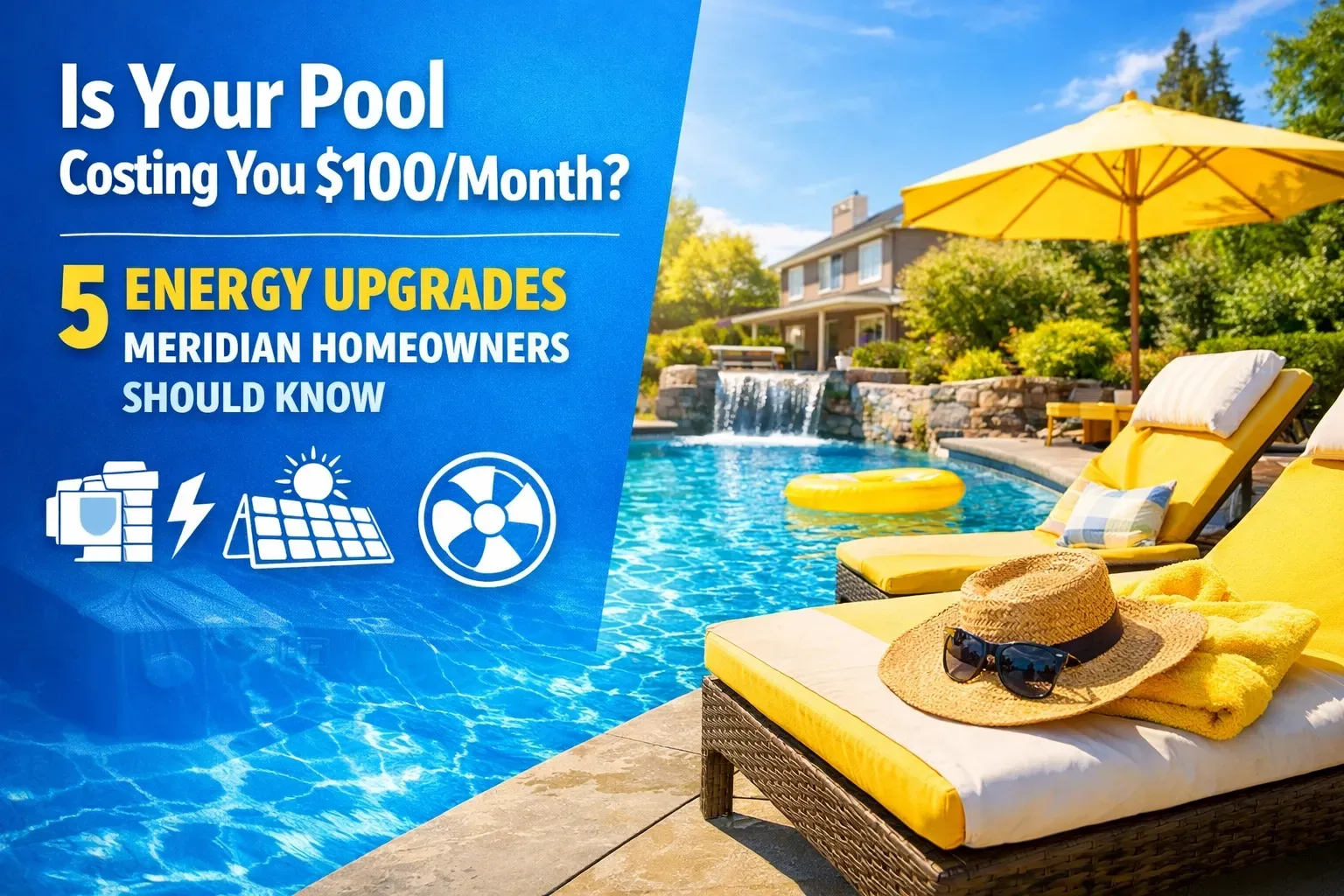
Is Your Pool Costing You $100 + /Month? 5 Energy Upgrades Meridian Homeowners Should Know
Simple upgrades can save you big on utilities
Let's be honest: nobody buys a pool to watch their electric bill skyrocket. But if you're running an older pool with outdated equipment, there's a good chance you're spending $75 to $150 per month just to keep the water circulating. Add heating into the mix, and you could be looking at $200+ during those cool Meridian spring and fall evenings when you're trying to squeeze out a few more weeks of swim season.
Here's the good news: You don't have to choose between a beautiful backyard pool and a reasonable utility bill. Modern pool technology has come a long way, and the right upgrades can cut your monthly operating costs in half (or more) while making your pool easier to manage and more enjoyable to use.
Let's walk through five energy upgrades that Meridian and Boise homeowners are using right now to modernize their pools: and save serious cash in the process.
1. Variable Speed Pumps: The Big One
If there's one upgrade that pays for itself faster than any other, it's swapping out that old single-speed pump for a variable-speed pump (VSP).
Here's why this matters: Your pool pump is the heart of your circulation system, and if it's a single-speed model, it's basically running at full throttle 24/7 (or at least 8–12 hours a day). That's like driving your car on the freeway at full speed whether you're going to the grocery store or cruising down Eagle Road during rush hour: it's overkill, and it's expensive.
Variable-speed pumps adjust their speed based on what your pool actually needs. Filtering water? Low speed. Running the waterfall feature? Bump it up. Most of the time, your pump can run at a fraction of its maximum capacity and still keep your water crystal clear.
The Numbers
- Old single-speed pump: $75–$150/month
- New variable-speed pump: $30–$50/month
That's a potential savings of $50–$100 every single month. Over a year, you're looking at $600–$1,200 back in your pocket. Most variable-speed pumps pay for themselves in 2–3 years, and they typically last 8–10 years.
And here's the kicker: As of 2021 (and reinforced in 2025), the U.S. Department of Energy mandates that most residential pool pumps sold must meet higher energy efficiency standards, which basically means variable-speed technology. If your pump is 10+ years old, it's not just outdated: it's costing you money every day it runs.
2. LED Pool Lighting: Small Change, Big Impact
If you've got old incandescent or halogen pool lights, you're burning energy (and money) for no good reason. LED pool lights use up to 80% less electricity than traditional bulbs, and they last 10–15 times longer.
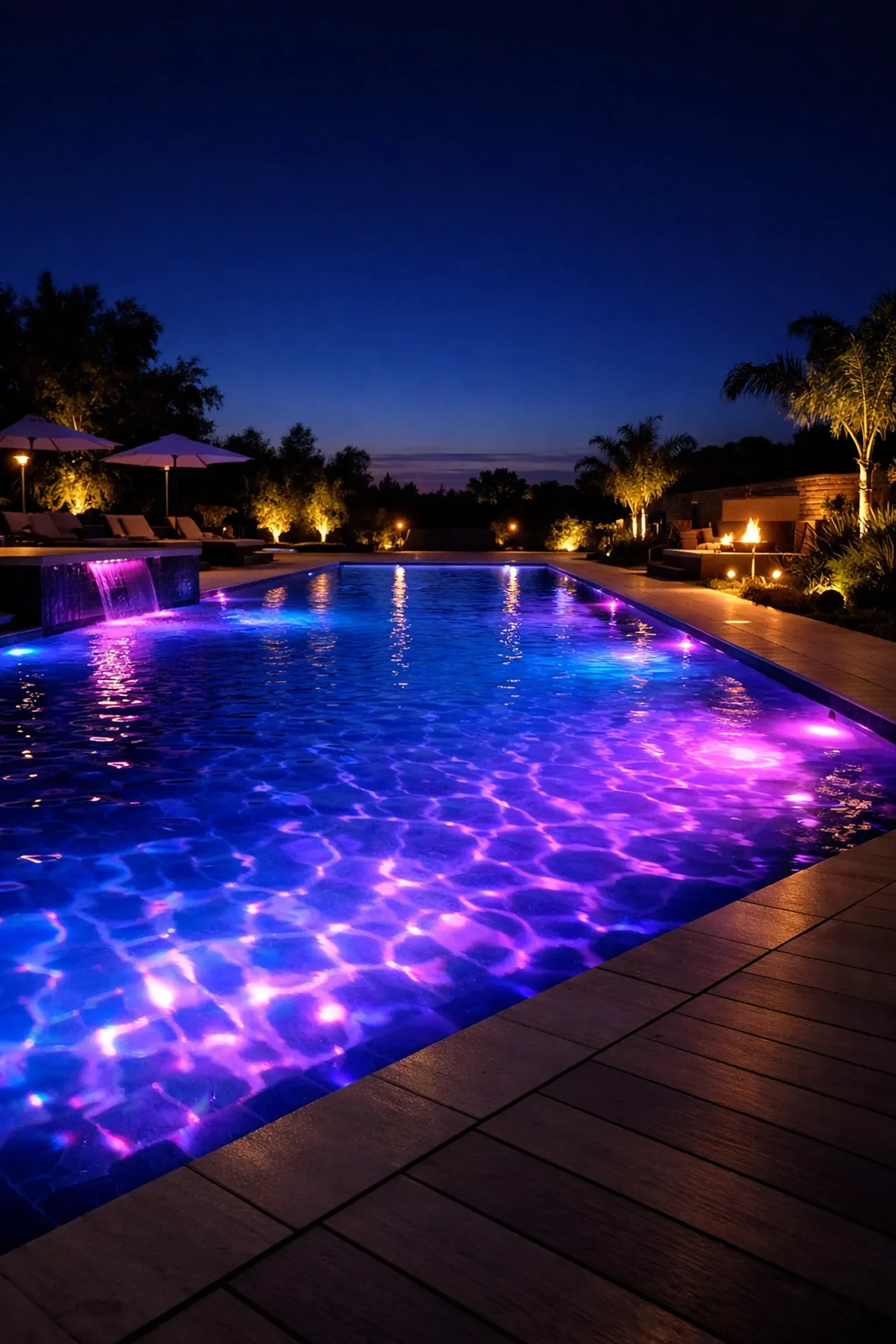
Plus, let's talk aesthetics for a second. Modern LED systems let you change colors with the touch of a button: blue for a calm evening swim, purple for a Saturday night pool party, or even color-cycling modes if you want to get fancy. It's a small upgrade that makes your backyard feel like a resort.
What It Costs You Now
Traditional pool lights can add $10–$20/month to your bill if you use them regularly. LEDs? Maybe $2–$3. Over a year, that's another $100+ in savings, and you're not replacing burned-out bulbs every season.
3. High-Efficiency Heaters: Warm Water Without the Guilt
Let's talk about heating, because this is where things can get expensive fast. If you're heating your pool with an older gas or electric resistance heater, you're probably seeing bills in the $100–$300/month range during the months you actually use it.
For Meridian homeowners who want to extend their swim season into May or even late September, that adds up.
The smarter move? A heat pump. Unlike traditional heaters that generate heat, heat pumps transfer heat from the air into your pool water. They're incredibly efficient: especially during those mild Idaho spring and fall days when the air temp is in the 60s or 70s.
The Trade-Off
Heat pumps work best when outdoor temps are above 50°F, so they're not great for mid-winter hot tub use. But for extending your swim season by 8–12 weeks? They're a game-changer. Monthly operating costs typically run $50–$100, compared to $200+ for gas heaters.
If you already have a gas heater and it's still in good shape, consider using it as a "backup" for those unexpectedly cold weekends, and let the heat pump handle the day-to-day temperature maintenance.
4. Automation & Smart Controls: Set It and Forget It
Here's where pool ownership in 2026 gets really convenient. Pool automation systems let you control your pump, heater, lights, and even water features from your phone. But beyond the "cool factor," they're legitimacy money-savers.
Why? Because you can program your equipment to run during off-peak electricity hours. If your utility provider (like Idaho Power) offers time-of-use rates, running your pump from 9 PM to 6 AM instead of during the afternoon can cut your costs by 30–40%.
What You Can Control
- Pump speed and scheduling
- Heater temperature and timing
- Lighting scenes
- Chlorinators and chemical feeders
- Waterfall and fountain features
And here's the best part: You're not just saving money: you're making sure your pool is always "swim-ready" without having to walk outside and flip switches. If you're heading home from a weekend in McCall and want the pool heated by Sunday evening, you can fire up the heater from your phone while you're still on Highway 55.
5. ecoFinish: The Upgrade That Saves You on Chemicals (and Energy)
This one's a little different, but stick with me: it's worth it.
If your pool has old plaster, you're probably dealing with a rough, porous surface that soaks up chemicals, harbors algae, and requires constant balancing. ecoFinish (and similar advanced interior finishes like AquaBright) create a smooth, non-porous surface that:
- Reduces chemical usage by 30–50%
- Improves water circulation and heat retention
- Cuts down on brushing, vacuuming, and maintenance time
When your pool surface is smoother and more efficient, your pump doesn't have to work as hard, your heater retains warmth better, and you're not dumping in extra chlorine or algaecide every week. It's an indirect energy saver, but over the course of a season, it adds up.
Plus, ecoFinish looks incredible. It comes in a range of colors and finishes (including options that mimic the look of natural stone or Caribbean-blue lagoons), and it's far more durable than traditional plaster. Most ecoFinish installations last 15–20 years with minimal maintenance.
You can learn more about ecoFinish options here.
Real Talk: How Much Can You Actually Save?
Let's do some quick math for a "typical" older pool in Meridian:
Before Upgrades:
- Single-speed pump: $100/month
- Incandescent lights: $15/month
- Gas heater (3 months/year): $200/month average = $600/year
- High chemical usage: $50/month extra
Total annual cost: ~$2,000+
After Upgrades:
- Variable-speed pump: $40/month
- LED lights: $3/month
- Heat pump (3 months/year): $75/month average = $225/year
- Reduced chemicals (ecoFinish): $20/month savings
New annual cost: ~$800–$1,000
That's a savings of $1,000–$1,200 per year. And most of these upgrades will pay for themselves within 3–5 years, then keep saving you money for the next decade.
The Bottom Line
Modernizing an old pool isn't just about making it look better (though that's a nice bonus). It's about making it cheaper and easier to own.
If you're spending $100+ per month to run your pool, you're essentially paying for outdated technology. The good news? You don't have to do all five upgrades at once. Start with the variable-speed pump (the biggest bang for your buck), then tackle lighting, heating, and automation as your budget allows.
And if you're planning a larger pool remodel anyway: new tile, updated decking, a fresh interior finish: this is the perfect time to bundle in these energy upgrades. You'll save on labor costs, and you'll walk away with a pool that's not just beautiful, but also smart, efficient, and affordable to run for years to come.
Want to talk numbers for your specific pool? Give us a call at (208) 495-5047 or reach out here. We'll walk your backyard, look at your current setup, and show you exactly what you could be saving every month. No pressure, no sales pitch: just honest advice from a local Meridian pool specialist who's seen (and fixed) hundreds of energy-draining pools just like yours.
Your pool should be a source of joy, not a monthly budget headache. Let's fix that.