
Converting from Tablets to Salt
This is a subtitle for your new post
Chlorine to Salt: The Technical Guide to Saltwater Conversion for Boise Pools
If you’ve spent any time at Quinn’s Pond or Lucky Peak on a scorching July afternoon, you know that nothing beats the Idaho heat like a dip in the water. But if you own a pool here in Boise, you also know the struggle of the "chlorine dance." You know the one: running to the store for heavy buckets of tabs, testing the water constantly, and dealing with that distinct "pool smell" that seems to stick to your skin for days.
Lately, more and more of your neighbors across the Treasure Valley are asking us the same question: "Is it finally time to make the switch to salt?"
The short answer? Absolutely. But a saltwater conversion isn't just about dumping a bag of salt into the deep end and calling it a day. It’s a technical upgrade that transforms how your pool functions at a molecular level. Whether you’re tired of itchy eyes or you’re looking to make a smart long-term investment in your property, this guide will walk you through the nuts and bolts of converting a chlorine to salt pool.
Why Salt? (It’s Not Just About the "Beach" Vibe)
Before we get into the wires and pipes, let’s talk about why you’d bother. Is your pool missing the "pop" it had when it was first installed? Traditional chlorine pools rely on "shocks" and tablets that create high peaks and low valleys in your chemical levels.
A saltwater system, however, provides a steady, consistent flow of pure chlorine. Here are the big wins for Boise homeowners:
- Gentle on the Body: If you have kids with sensitive skin or you’re tired of your hair feeling like straw after a swim, salt is a game-changer. The water feels "softer" (similar to a water softener in your home).
- No More "Chlorine Smell": Ironically, that heavy chemical smell in traditional pools is actually caused by chloramines (spent chlorine). Salt systems burn these off more efficiently.
- Long-Term Savings: While there’s an upfront cost for the equipment, you’ll stop spending hundreds every season on buckets of chlorine tabs.
- Automation: You’re essentially turning your pool into a mini-factory that makes its own sanitizer.
The Science: How It Actually Works
A common misconception is that a saltwater pool is chlorine-free. Spoiler alert: it’s not! It’s just a different way of delivering the chlorine.
The heart of the system is the Salt Chlorine Generator (SCG). Through a process called electrolysis, the system takes dissolved salt (sodium chloride) and passes it through an electrolytic cell. This zap of electricity splits the salt molecules, creating pure hypochlorous acid: the stuff that kills bacteria and algae.
The coolest part? Once the chlorine has done its job, it turns back into salt and the process starts all over again. It’s a closed-loop cycle that is incredibly efficient for our dry Idaho climate.
The Essential Equipment Checklist
To do a professional saltwater conversion, you can't just DIY a solution with hardware store parts. You need industrial-grade components that can handle the mineral content of our local water. At Idaho Pool Remodeling, we focus on high-quality prominent chemical controls to ensure your system lasts for years.
Here is what we install during a standard conversion:
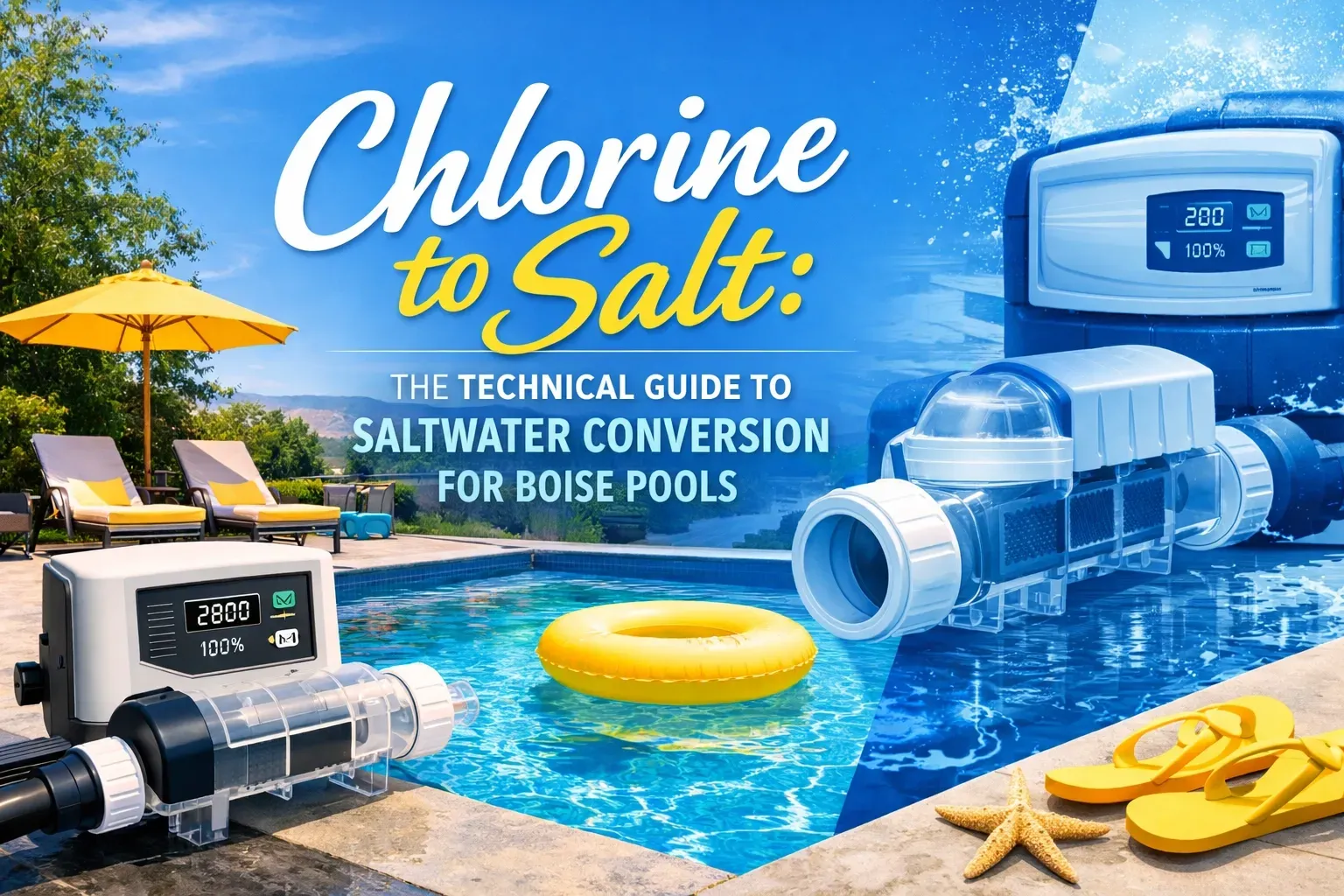
- The Salt Cell: This is the "engine" of the system. It consists of metallic plates (usually coated in ruthenium or iridium) housed in a clear or opaque plastic housing. This is plumbed directly into your existing return line.
- The Control Unit: This is the "brain" of the operation. It’s a digital panel mounted near your equipment pad that allows you to adjust the chlorine output, check salt levels, and monitor the system’s health.
- The Flow Switch: A safety device that ensures the cell only fires when water is actually moving through the pipes. (Safety is always number one, especially with electrical components near water!)
- Sacrificial Anode: Because salt can be corrosive to metal over long periods, we often install a zinc anode. It "sacrifices" itself to protect your heater, auto cover and ladder from galvanic corrosion.
The Technical Step-by-Step Process
When our team arrives at your home, we follow a strict technical protocol. You wouldn't want a "close enough" approach when it involves your backyard investment, right?
1. Water Chemistry Balancing (The Foundation)
We can't just add salt to "bad" water. We first bring the pool to a baseline. This means balancing the pH, total alkalinity, and calcium hardness. We also ensure your cyanuric acid (conditioner) is at the right level to protect your new salt-generated chlorine from being "burned off" by the intense Boise sun.
2. Physical Plumbing Installation
We cut into the existing PVC return line, usually after the heater and filter. The salt cell must be the last thing the water hits before it goes back into the pool. This prevents concentrated chlorine from sitting inside your expensive heater.
3. Electrical Integration
The control unit needs a power source, typically wired into your pool’s timer or automation system. We make sure the cell only receives power when the pump is running: this is a critical safety step to prevent gas buildup.
4. The Salt Addition
We calculate the exact amount of pool-grade salt needed based on your pool's total gallonage. For most Boise pools, we’re aiming for about 3,200 parts per million (ppm). To give you a reference, the ocean is about 35,000 ppm. You’ll barely taste it! We spread the salt across the pool floor and let the pump run for 24 hours to ensure it's fully dissolved before turning the cell on.
5. Sacrificial Anode
A sacrificial what?? A sacrifical anode is a device the gives up its epectrons faster than other parts of the pool. This is especially important to protect heaters, auto covers and other mettalic parts of the pool
6. Calibration and Testing
Once the salt is dissolved, we fire up the unit. We use digital testers to verify the salt level and calibrate the control board. We’ll show you exactly how to read the display so you’re never in the dark.
Is Your Pool a Candidate?
Most in-ground pools in the Treasure Valley are perfect candidates for a saltwater conversion. Whether you have a classic plaster finish or you’ve upgraded to a modern ecoFinish, salt works beautifully.
However, there are a few things to consider:
- Natural Stone: If you have porous natural stone coping (like certain types of flagstone), the salt can cause "spalling" or pitting over time if the stone isn't sealed.
- Older Heaters: If your heater has a copper heat exchanger that’s already on its last legs, the salt might accelerate its retirement. We always perform a thorough swimming pool inspection before we start to make sure your equipment is ready for the change.
- Automatic Pool Covers: Salt pools can be hard on these systems because of the large amount of metallic components. Regular rinsing of the mechanism & tracks as well as the use of sacrificial anodes helps minimize the effects pf salt on your automatic pool cover.
Professional Installation vs. The "Guy with a Truck"
We get it: Idahoans are handy. We love a good DIY project (it’s basically a requirement for living here). But when it comes to the chemistry and electrical work of a salt conversion, having a certified pool operator handle the job is vital.
In Boise, our water can be "hard" (full of minerals like calcium). If a salt system isn't calibrated correctly for our local water, the cell can "scale up" in just a few weeks, rendering it useless. We know how to set these systems up to handle the specific mineral profile of the Treasure Valley. Plus, we stand behind our work with the expertise that comes from over 25 years in the industry.
Maintaining Your New Salt System
Once the conversion is done, your swimming pool maintenance actually gets easier, but it doesn't disappear. You’ll still need to:
- Check your salt levels (usually just a few times a season).
- Clean the salt cell with a mild acid solution every 3–6 months to remove calcium buildup. The manufacturer's instructions will explain this.
- Monitor your pH, as salt systems tend to make the pH rise naturally over time.
Conclusion: A Smart Investment for Boise Living
Converting from chlorine to salt is one of the single best upgrades you can make for your pool. It increases your home’s value, slashes your weekly chore list, and: most importantly: makes the water feel incredible. It’s like upgrading from a flip phone to a smartphone; once you make the switch, you’ll wonder how you ever lived with the old way.
Are you ready to stop lugging chlorine buckets and start enjoying a silkier, smarter swim? Safety and expertise are just a phone call away. At Idaho Pool Remodeling, we’ve been helping Boise families create their dream backyards for decades, and we’d love to help you next.
Ready to make the switch?
Give Scott and the team a call today at
(208) 495-5047 or
contact us here to schedule your professional saltwater conversion consultation! Let’s get your pool ready for the best summer yet.