
The Watered Down Plaster Myth
Why modern pools struggle

If you’ve been hanging out on Reddit lately: specifically the r/pools or r/swimmingpools subreddits: you’ve probably seen the "conspiracy theory" that’s making its rounds. It usually goes something like this: "Back in the 90s, a pool finish would last 25 years, but today’s plaster is just watered-down junk. They don't make it like they used to!"
As someone who spends every day looking at interior finishes across the Treasure Valley, I can tell you that the sentiment is real, but the "why" is often misunderstood. Is your pool missing the "pop" it had when it was first installed? Does the surface feel like 40-grit sandpaper against your feet?
It’s easy to blame the materials. After all, everything seems to be getting more expensive and lower quality these days, right? (Looking at you, chip seal season in Idaho!) But the truth about pool plaster is a bit more technical. It isn't that the plaster is "watered down" in the bag; it’s a combination of evolving chemistry, Idaho’s brutal freeze-thaw cycles, and how we manage our water.
The "Good Old Days" (And Why We Can't Go Back)
Let's address the elephant in the room: Pool plaster has changed since the 1980s and 90s (and long before that!). We see pool built in the 60's that still have the original plaster and tile. Back then, standard pool plaster was a mix of white Portland cement and white silica sand. It was simple, and it worked. However, it also often contained things we don’t use anymore: like asbestos fibers: to help with durability and "workability."
Modern plaster uses different types of white Portland cement and finer grades of marble dust (calcium based). While these materials are technically more refined, they are also more sensitive. The industry has moved toward safer, more environmentally friendly components, but that means the margin for error during installation and maintenance has shrunk. If you are looking for pool resurfacing near me, you need a team that understands these modern nuances, not just someone throwing old-school techniques at new-school materials.
Why Idaho is "Hard Mode" for Pool Surfaces
If you live in Boise, Meridian, or Eagle, you know our weather has a bit of an identity crisis. We can have a 108-degree afternoon in the summer followed by a -10-degree night in the winter. This "freeze-thaw" cycle is the absolute nemesis of pool plaster and other pool components.
1. The Expansion Gap
When water gets into the microscopic pores of your plaster and freezes, it expands. In an older or poorly maintained pool, this expansion creates tiny "spider web" cracks. Over a few seasons, those tiny cracks can become "spalling" or delamination, where the top layer of plaster literally flakes off like a bad sunburn.
2. The High Desert Reality
Our low humidity in the summer causes rapid evaporation. As water evaporates, the minerals (like calcium) stay behind and become more concentrated. If you aren't staying on top of your
pool maintenance in Boise, that concentrated calcium can create "scale" on your walls or, worse, start pulling minerals out of your plaster to balance the water.
3. Hard Water Woes
Let’s be honest: Treasure Valley water is "crunchy." The high mineral content in our tap water means we are starting with a chemical uphill battle the moment we fill the pool. We often see metals and minerals like Copper, Iron and Manganese that lead to staining and other pool issues.
The "Watered Down" Error: It’s the Install, Not the Product
When people say plaster is "watered down," they are usually seeing the effects of a poor installation. In the industry, we call this "lubrication water."
Plaster is hard work. It’s heavy, it’s hot, and it’s a race against the clock. To make the plaster easier to spread and smooth out, some "budget" pool resurfacing companies near me will spray excessive water onto the surface while they trowel it.
What's worse than excessive lube water? Adding too much water to the mix and skewing the water to cement ratio. Simply put, the more water, the weaker the plaster mix.
What happens next?
- Bleeding: The excess water rises to the top, bringing fine cement particles with it.
- Weak Surface: This creates a thin, brittle layer on the surface that looks great for six months but starts to "dust" or pit within a year.
- Porosity: As that extra water evaporates, it leaves behind a porous, "Swiss cheese" structure at a microscopic level.
- Softening: Much like porosity, the weakened plaster softens over time and loses its structural integrity.
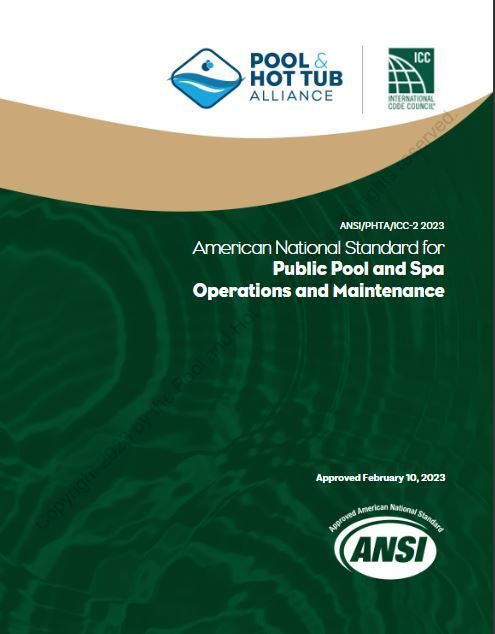
At Idaho Pool Remodeling, we combat this by sticking to strict mixing ratios specified in ANSI/PHTA/ICC/NPC-12 2025 American National Standard for the Plastering of Swimming Pools and Spas or per the manufacturer's specifications. We also utilize specialized additives that improve workability without compromising the integrity of the cement matrix. Safety is always number one, and that includes the structural safety of your pool's shell!
The Silent Killer: LSI and Water Chemistry
If I could give every pool owner in Idaho one piece of advice, it would be to learn about the Langelier Saturation Index (LSI).
Think of LSI as a scale that tells you if your water is "saturated" or "hungry."
- Hungry Water (Negative LSI): If your water is low in calcium or pH, it will literally eat the calcium out of your plaster to feed itself. This makes the surface feel rough and pitted.
- Over-Saturated Water (Positive LSI): This leads to calcium scaling, which feels like sandpaper and traps dirt/algae.
Most of the "failed" plaster jobs we see aren't actually bad plaster; they are the result of years of "hungry" water slowly dissolving the finish. This is why we highly recommend having a certified pool operator look at your system at least once a season.
How We Build Better Pools in Idaho
So, how do we make sure your pool doesn't fall victim to the "modern plaster struggle"? We take a three-pronged approach:
1. Superior Materials & Additives
We don't just use basic cement and sand. We often use fortified mixes with pozzolans (which fill those microscopic pores) and polymers that give the plaster a bit of "flex" to handle Idaho’s temperature swings.
2. Specialized Prep Work
A new finish is only as good as the bond beneath it. We don't just "plaster over" the old stuff. We ensure the substrate is mechanically prepped and use high-performance bond coats to prevent delamination. If you have more than 1 layer of plaster, just like your homes roof, it needs to be stripped.
3. The EcoFinish Alternative
Sometimes, plaster isn't the right answer for our climate. This is why we are huge fans of
EcoFinish. It’s a high-performance thermal plastic coating that is pH neutral. It doesn't care about your LSI, it doesn't crack in the freeze-thaw cycle, and it stays smooth forever. It’s basically the "cheat code" for Idaho pools.
Practical Tips to Protect Your Investment
Whether you just got a fresh resurface or you're trying to stretch the life of an older pool, here are five things you should do right now:
- Test your water weekly: Don't just check chlorine; check your pH, Calcium Hardness and Carbonate Alkalinity.
- Maintain your LSI: Keep your water "balanced" so it doesn't start eating your walls.
- Winterize properly: A pool that isn't cared for in the winter is where most of the damage happens. (Need help? Check out our pool inspections to make sure you're ready for the cold).
- Brush regularly: Brushing helps "cure" new plaster and keeps minerals and algae from exploiting the forming crystalline structures and pores to grab onto.
- Hire professionals: When it's time to remodel, don't just go with the cheapest bid. Look for a team with a proven gallery of work in the Treasure Valley.
Does Your Pool Need a Second Chance?
Is your pool looking a little tired? Are you tired of the kids coming inside with "pool toe" from a rough surface?
The "watered down" myth might be common on Reddit, but the reality is that a high-quality, professionally installed finish can still last a decade or more if it's done right and cared for properly. We specialize in bringing Idaho pools back to life, whether that’s through a traditional plaster refresh or a modern EcoFinish upgrade.
Don't let another summer go by with a pool you aren't proud of. Let’s make your backyard the highlight of the neighborhood again!
Ready to start your project?
Give us a call at
(208) 495-5047 or head over to our
Contact Page to schedule a consultation. Whether you need a simple
tile cleaning or a full-scale
commercial remodel, Scott and the team at Idaho Pool Remodeling have you covered.
Life is Better by the Pool