
Corrosive Environments:
are chemical vapors rotting your pool equipment?
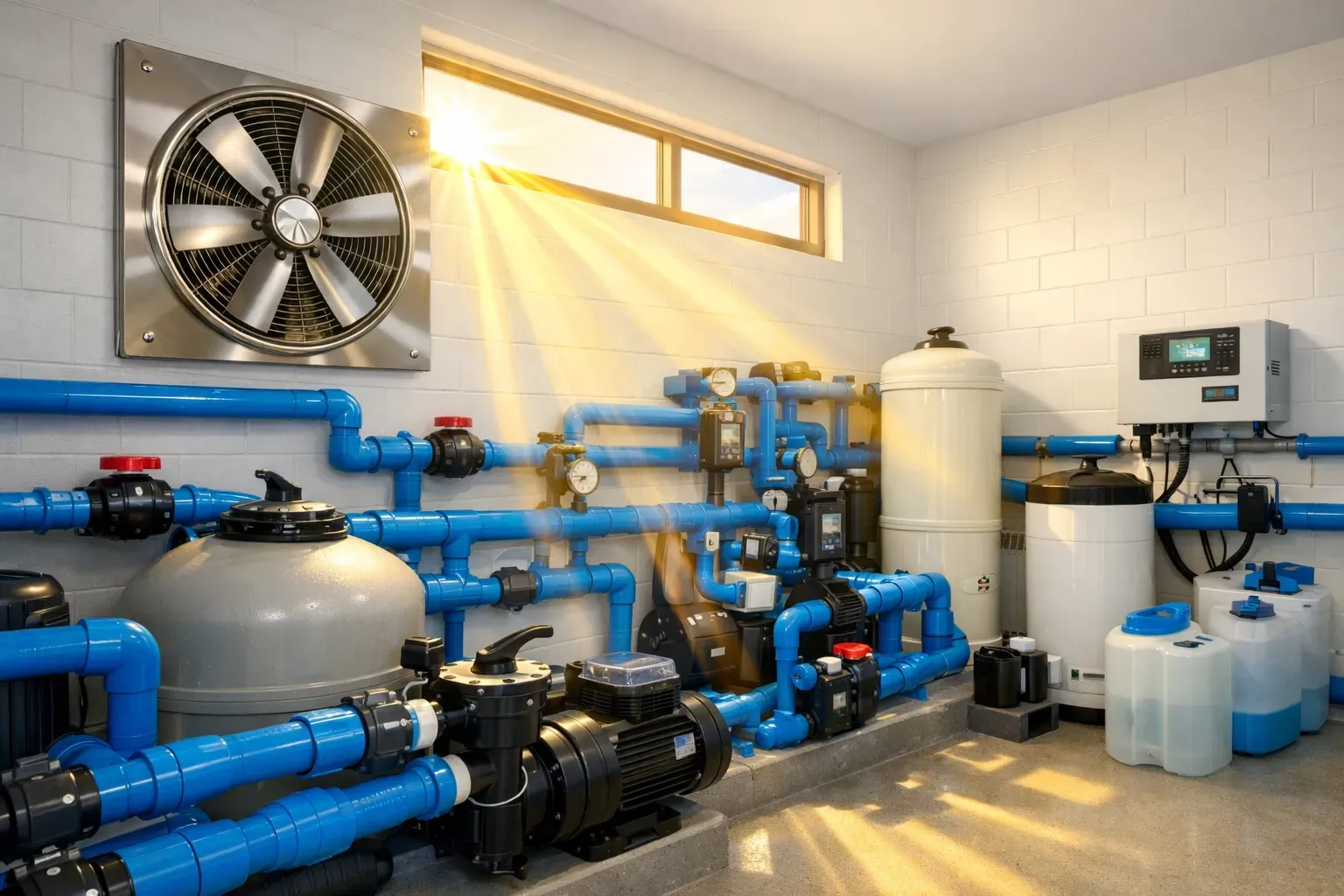
We all know that distinct smell. You open the door to a commercial pool equipment room or chemical storage area, and that sharp, “pool-y” scent hits you in the back of the throat. For a lot of Boise hotel owners, apartment property managers, and HOA boards, it’s easy to chalk it up to “that’s just what pools smell like.” But here’s the reality: if you can smell it that strongly, your equipment room is effectively marinating your electrical and mechanical systems in corrosive gas.
At Idaho Pool Remodeling, we spend a lot of time in the Treasure Valley inside pump rooms (not just backyard sheds). And in commercial settings, the risk is often higher because the rooms are larger, the circulation systems are more complex, and the chemical volumes are bigger (more product = more off-gassing). One of the most common—and expensive—failures we see isn’t a lightning strike or a mystery manufacturing defect. It’s chemical vapors quietly eating away at your investment from the inside out.
Safety is always number one, so let’s dive into why managing these vapors isn’t just about comfort—it’s about NEC 680.14 and OSHA compliance, liability protection, manufacturer warranty exposure, and avoiding the dreaded “POOL CLOSED” sign that guests and residents never forget (especially during Boise’s first hot week of summer, right when everyone wants to swim).
1. The NEC 680.14: Defining the "Corrosive Environment" (and Your Liability)
Did you know the National Electric Code (NEC) has a specific section just for pool equipment rooms? Most people think of the NEC as a bunch of rules for how to wire a light switch, but NEC 680.14 specifically addresses the hazardous nature of pool chemicals.
The code defines areas where pool chemicals are stored or where pool equipment is located as "Corrosive Environments."
Why does this matter for hotels, motels, apartments, and HOA facilities? Because in a commercial pump room, you’re not just protecting hardware—you’re protecting your business from the kind of incident that becomes a claim, an inspection issue, or a lawsuit. If a corroded electrical connection fails, overheats, or arcs, you don’t want to be explaining to an insurer (or an investigator) why a known corrosive environment wasn’t addressed.
Chlorine and muriatic acid are highly reactive. When these chemicals off-gas (which they do constantly, especially in our hot Idaho summers), they create an atmosphere that is literally acidic. This vapor doesn't just sit there; it attacks metal. It eats through electrical conduits, corrodes the delicate copper wiring inside expensive control boards, and can even cause structural fasteners to fail.
If your equipment room isn't treated as a corrosive environment with the proper materials and seals, you’re basically setting a slow-motion fuse on your entire system—and the risk profile for a business is very different than a weekend backyard inconvenience.
2. OSHA Mandates: It’s All About the Airflow (and Business Compliance)
OSHA (the Occupational Safety and Health Administration) is workplace-focused—meaning if you’re running a hotel, apartment community, or HOA facility, this isn’t theoretical. Your staff, vendors, and maintenance teams are walking into these rooms, and chemical handling + ventilation expectations are very real.
To prevent the buildup of toxic vapors, the industry standard is 10 air changes per hour.
Think about that for a second. Every six minutes, all the air in your equipment room should be swapped out for fresh Boise air. This is often achieved through:
- Mechanical Ventilation: Fans designed to move high volumes of air (sized for commercial rooms, not a “bathroom fan” workaround).
- Negative Airflow: Pull air out of the room and vent it safely outside, rather than letting fumes seep into adjacent spaces (hallways, storage rooms, laundry areas, or tenant/guest areas).
Is your equipment room currently a stagnant box? If the air feels “heavy,” burns your eyes, or makes you cough when you step inside, you likely aren’t meeting the safety threshold for proper ventilation. And in a commercial setting, that can turn into more than a comfort issue—it can become a non-compliance issue that puts your operation and people at risk.
3. Why Manufacturers Will Void Your Warranty (and Why That Hurts Commercial ROI)
We often get calls from frustrated property teams saying, “This heater isn’t that old—why is it already leaking?” When we open the cabinet, the copper heat exchanger can look like it was dipped in acid. (Because, essentially, it was.)
Equipment manufacturers like Pentair, Jandy, and Hayward are very specific in their installation manuals: damage caused by corrosive atmospheres is not covered by warranty.
For hotels and multi-family properties, that matters because warranty assumptions are often baked into capital planning. If the room environment voids coverage, the “expected life” of the equipment drops—and your replacement costs jump.
Internal components are particularly vulnerable:
- Heater Exchangers: Most heaters use copper coils. Acidic vapors in the air are drawn into the heater's intake, where they meet moisture and heat, creating a highly corrosive cocktail that thins the copper until it pinholes.
- Pump Motors: Cooling fans pull ambient air across the motor's internal windings. If that air is laced with chlorine vapors, the motor can burn out or seize long before its time.
- Circuit Boards: The tiny pathways on a modern poolside technology control board are incredibly sensitive. Corrosion can lead to ghost errors, failed relays, and a very expensive replacement bill.
By not managing your vapors, you’re essentially paying for your equipment twice—and you may be doing it without warranty protection.
4. The Idaho Context: Why Boise Commercial Pump Rooms Face Unique Risks
In the Treasure Valley, we deal with extreme temperature swings. During our blistering summer months, the heat inside an enclosed commercial equipment room can skyrocket (especially if it shares walls with other service spaces). Heat acts like a catalyst for chemical off-gassing. That drum of liquid chlorine, stack of tabs, or acid supply is releasing vapors much faster at 100°F than it does at 70°F.
And unlike a backyard shed, many Boise-area commercial properties have equipment rooms tucked into the building footprint—near laundry rooms, maintenance corridors, storage areas, or other back-of-house spaces. Without proper negative airflow, vapors can migrate into adjacent areas and start “telling on themselves” through corrosion: rusted hinges, corroded door hardware, failing fasteners, and that lingering chemical bite in the air.
If you’ve ever had a room that “smells like the pool” long after the door closes, that’s not normal—and it’s not free.
5. Managing Your Storage: Dos and Don’ts for Commercial Chemical Rooms
How you store your chemicals is just as important as how you vent the room. And in commercial settings, you’re often dealing with higher volumes, more frequent handling, and more staff touchpoints (which increases the chance of a small mistake becoming a big incident). Follow these professional tips:
- Never Mix Liquid and Dry Chemicals: Even the vapors from a spilled liquid acid reacting with nearby chlorine tabs can create a fire or an explosion.
- Keep Chemicals Off the Floor: Store them on plastic shelving (metal will just rust). This helps contain spills and keeps containers away from floor-level moisture.
- Seal Your Containers (Every Time): It sounds basic, but loose lids are a vapor factory. Ensure every bucket is “clicked” shut and every jug is properly capped after each use (especially during busy weekends).
- Use One Way Vents or Acid Fume Scrubbers: Using one way vents and Acid Fume Scrubbers (AFS) allow for those sealed drums to not vent vapors to the equipment room while allowing the pumps to draw chemicals without causing a vacuum in the drum.
- Separate the Acid from the Chlorine: If possible, store muriatic acid in a different area than chlorine. Their vapors do not play well together.
- Train for Consistency (Not Heroics): If your chemical safety depends on “that one guy who knows pools,” you’re exposed. This is where CPO (Certified Pool Operator) training is a major advantage for commercial teams—consistent procedures, better documentation, and fewer preventable incidents.
Does your current storage setup look like a science experiment gone wrong? It might be time for a professional swimming pool inspection to make sure you’re protecting your people, your property, and your compliance posture.
6. The Solution: Professional Maintenance, Ventilation, and Training (So You Don’t Go “Pool Closed”)
At Idaho Pool Remodeling, we don't just “fix pools”—we engineer environments that last. When we handle a commercial pool remodel (and when we’re advising commercial clients on equipment room upgrades), ventilation and corrosion control are top-tier priorities because they protect uptime and reduce long-term replacement costs.
We look for signs of “the silent killer” during every service call:
- Pitting on metal surfaces.
- Green “crust” (oxidation) on copper wires.
- A “bleached” look to plastic components.
- The smell of “fixed” chlorine (chloramines) in the equipment area.
Here’s the business reality: corrosion-driven failures don’t just cost you parts and labor—they can cost you days of downtime. And for hotels, motels, apartments, and HOAs, downtime often turns into:
- resident/guest complaints and refunds,
- negative reviews, and
- the most expensive sign in the building: “POOL CLOSED.”
If you’re worried about the longevity of your equipment—or your pump room smells a bit too much like a chemistry lab—don’t wait for a total system failure. Proper swimming pool maintenance involves more than balancing the water; it includes protecting the hardware (and the people) that keep your facility running.
And if you want to tighten up consistency across staff and seasons, CPO (Certified Pool Operator) training is one of the smartest moves a commercial property can make. It helps your team manage chemical handling, documentation, and operational best practices in the exact environments where corrosion risk is highest.
Is Your Commercial Equipment Room Safe (and Defensible)?
Your pool should be an amenity—not a liability. Managing chemical vapors is a technical requirement that pays for itself in extended equipment life, fewer emergency calls, and fewer “surprise” shutdowns.
Are you ready to ensure your commercial pool system is running efficiently, safely, and in a way you can defend if you’re ever asked? Whether you need a simple consultation, a corrosion/ventilation review, staff Certified Pool Operator training support, or a full pool and spa remodel, our team is here to help. We work with Boise-area hotels, apartment communities, and HOA boards—and we understand the practical side of keeping amenities open while staying aligned with NEC and OSHA expectations.
Give us a call today at (208) 495-5047 or visit our contact page to schedule an inspection. Let’s make sure the only thing your guests, residents, and staff are breathing is clean Idaho air—and the only sign on your gate is “OPEN.”